
The Skew Chisel: Friend or Foe?
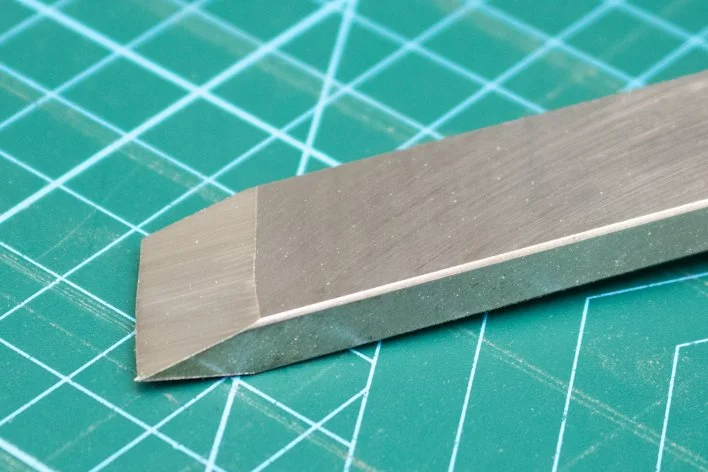
Ask any group of turners about the skew chisel and you'll get strong opinions. It's the tool people either love or fear, master or avoid. And that avoidance is a shame, because the skew is capable of producing the cleanest cuts in woodturning when used correctly.

The problem isn't the tool. It's the teaching – or lack of it. Most turners pick up a skew, experience a dramatic catch (the wood suddenly stops spinning as the tool digs in), and put it back in the rack forever. What they don't realise is that the catch wasn't inevitable. It was the result of a specific mistake that can be understood and avoided.
Les Thorne – my colleague here at The Woodturning School – has spent decades mastering and teaching the skew. His approach demystifies the tool completely. By the end of his Skew and Spindle Gouge class, students who arrived terrified of the skew are using it confidently for planing cuts, beads, coves, and decorative details.
The secret, if there is one, is understanding why catches happen. Once you know that, you can position yourself, your tool, and your approach to prevent them. It's not about being braver or having steadier hands. It's about geometry and physics, which can be learned.
This matters beyond the skew itself. The principles that make the skew work – correct presentation angle, bevel support, reading the wood's response – apply to every turning tool. Master the skew, and your understanding of cutting mechanics deepens across the board.
Les's class runs throughout the year, but June is particularly popular as people use longer evenings to practice what they've learned. If you've been avoiding the skew, or using it only tentatively, this is your chance to transform that relationship.
“Every tool has something to teach you. Even the ones that bite.”
Class Recommendation: Les Thorne's Skew and Spindle Gouge class. One day that changes your relationship with the most misunderstood tool in woodturning.