
The Woodturning School:
Equipped for Making.
Built for Teaching
The Workshop
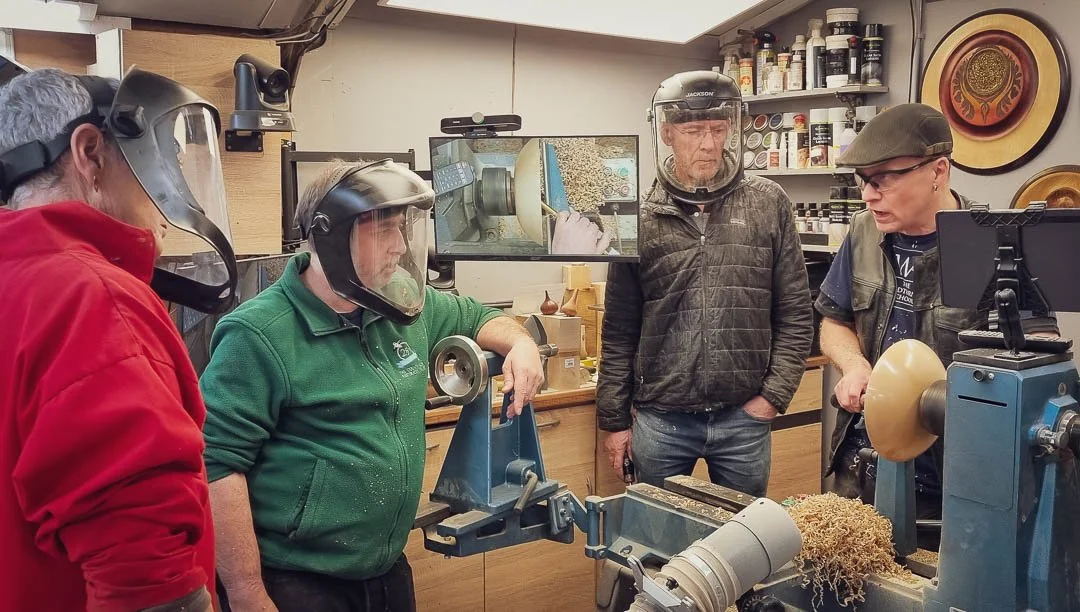
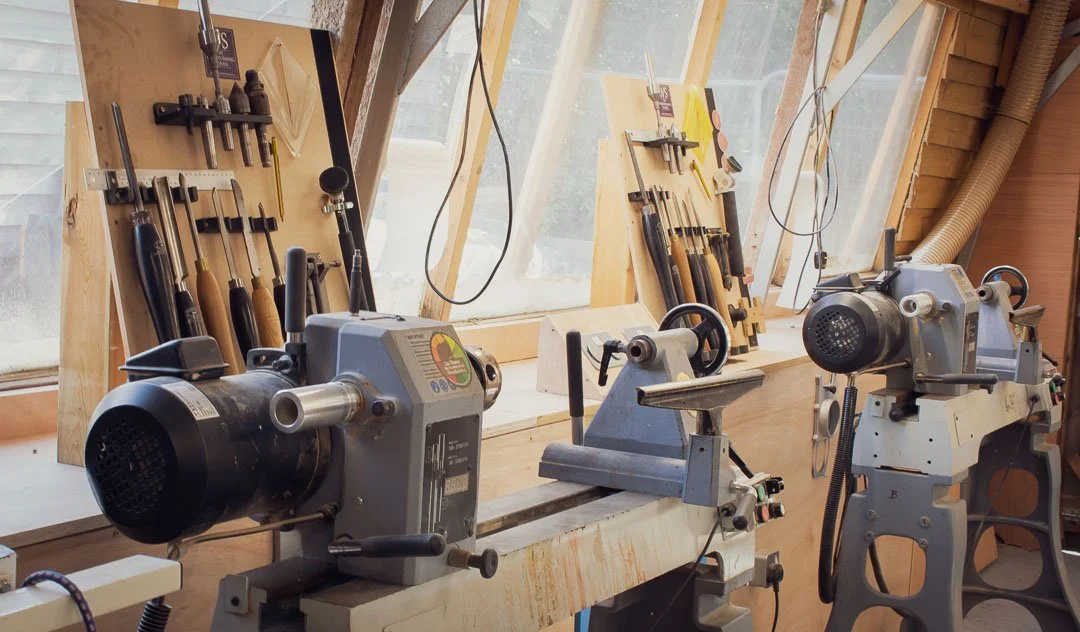
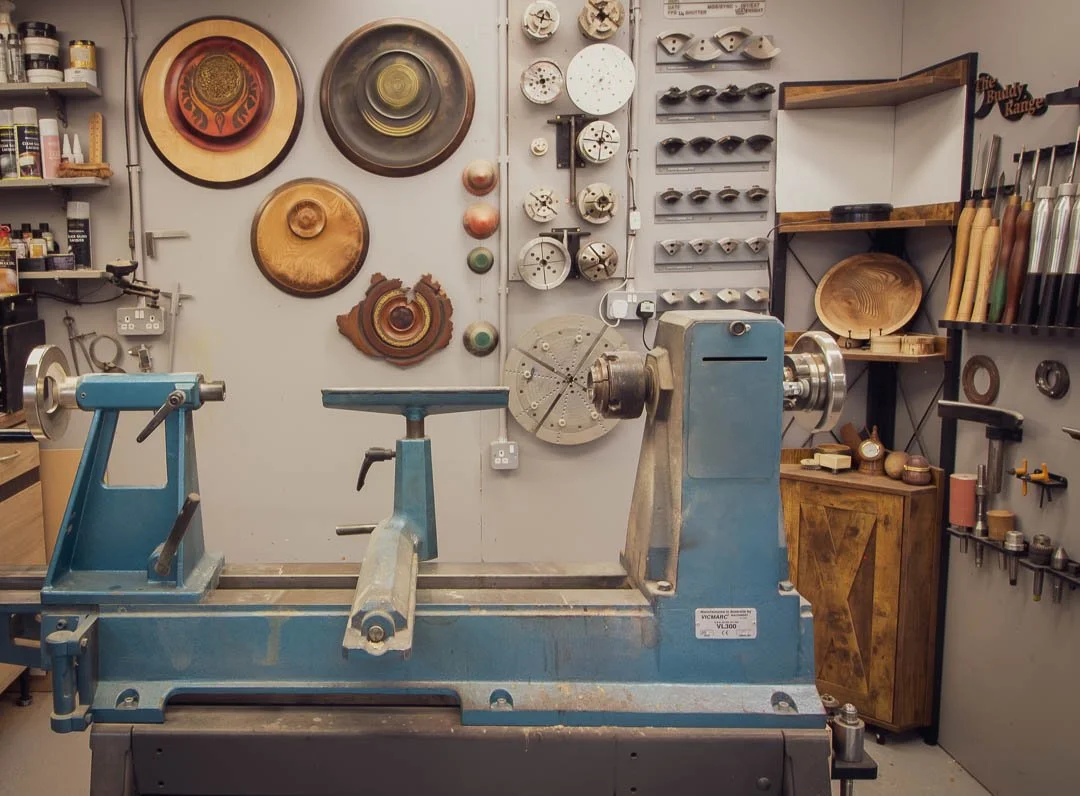
A purpose-built teaching workshop with everything you need to learn properly. We have five Axminster AT406WL student lathes and a Vicmarc VL300 for demonstrations.. There’s dust extraction at every station, air filtration, and a wood burner for the colder months.
A full camera and TV setup surrounds the demonstration lathe so you can see exactly what's happening with each cut. When you’re watching a technique, you're not trying to peer over someone's shoulder. You can see the tool angle, the bevel contact, the shavings.
Tools from leading manufacturers are available for every student: Crown, Henry Taylor, Robert Sorby and Simon Hope. You're welcome to bring your own, but you don't need to.
About The Woodturning School
The Woodturning School sits at Garthowen Garden Centre in Four Marks, Hampshire, a quiet corner in the countryside where the focus can be entirely on the work. The school was started in 2020, built into the space that once housed a potting shed. It has since been revamped and updated into a modern and smart workshop.
It was founded because we believe turning deserves to be taught well in small classes where a good amount of attention can be given to each student when they need it. We use professional-grade equipment because good tools make a difference.
Why Learn With Us?
Small class sizes. Maximum five students on most classes.
Registered Professional Turners. Both Martin and Les are on the Register of Professional Turners.
Everything included. Timber, tools, consumables, safety equipment, lunch on full-day courses. Just bring yourself.
Refresher videos. Two Day Beginners students get over almost four hours of video content to watch at home when the details get fuzzy.
A Typical Lesson Day
In this video, Martin takes you through the basics of the day and what to expect during your lesson here at The Woodturning School. Please watch it before your lesson, and also take note of the information in the email you will receive a few days before the lesson to make sure you can prepare for your lesson.
If you have any queries about the day, please read the FAQs or contact the school and I will be happy to help
Food & Drink
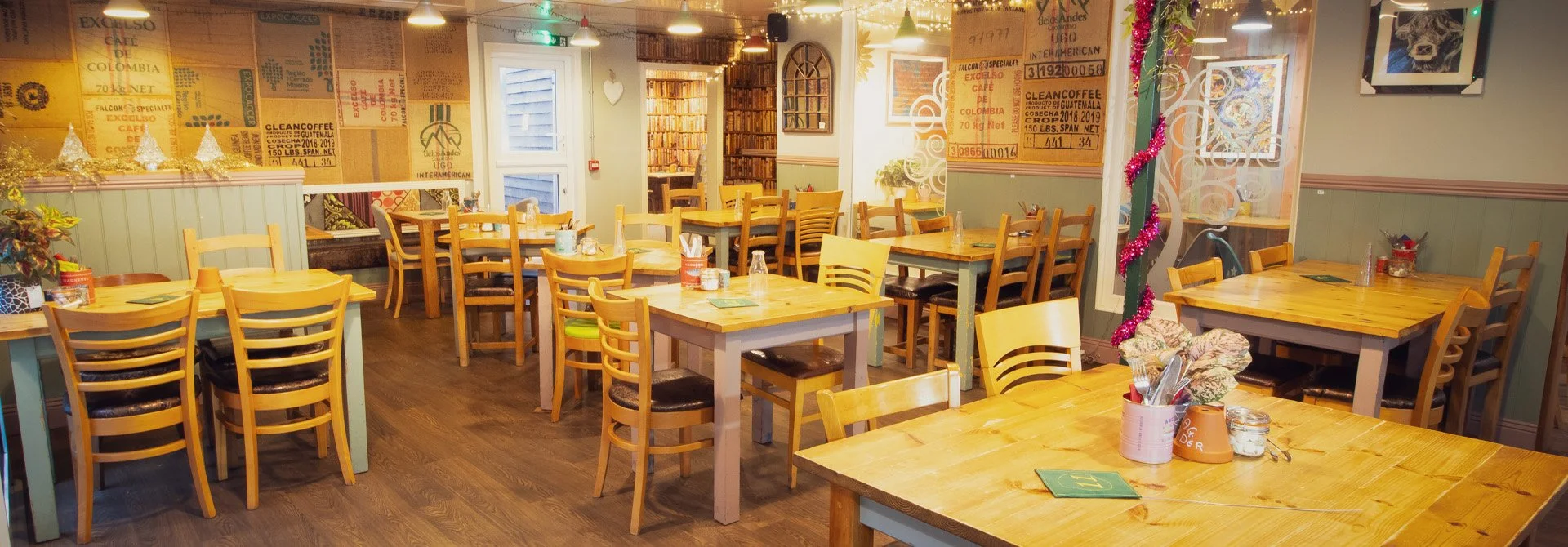
Most full-day courses include morning coffee and lunch at the Tree House Coffee Shop, right next door in the garden centre. We start each day there with a short meet-and-greet before heading to the workshop, then return for lunch.
The coffee shop offers a good seasonal range of sandwiches, jacket potatoes, and superb hot meals you can choose from on the day. Gluten-free and vegetarian options are available. If you have specific dietary requirements or allergies, just let them know.
Back in the workshop, there's tea, coffee, and bottled water on hand throughout the day. And probably biscuits.
Please note: Morning coffee and lunch are not included on pen-turning or half-day courses.
Tutors
Good teaching is patience, clarity, and the willingness to meet each student where they are. Our tutors are working turners who still spend time at their own lathes, still learning, still refining. That's what keeps the teaching honest. Between them, Martin and Les bring decades of experience in production turning, design, and specialist techniques.
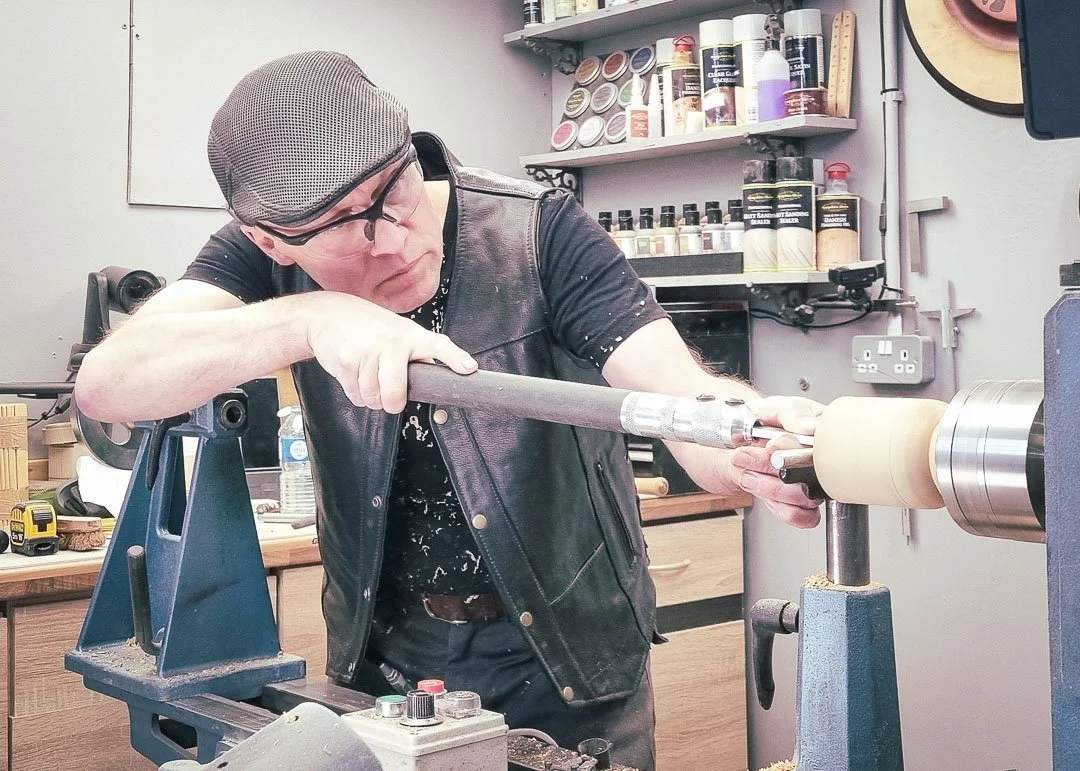
“I came to woodturning from photography and design. For years I worked through cameras and computers, creating work that required software and waiting for results. Then, in May 2014, I made a garden dibber on a lathe at an agricultural show. Something about it arrested my attention. Whatever the tool did, the piece responded. No screens, no delays. Just direct conversation between maker and material. I went home, found my uncle’s old Myford in storage, and haven’t really stopped since.
My design background shaped how I approach the craft. I found myself drawn to proportion and form, particularly the the Golden Ratio. That curiosity became my book, Woodturning: Form and Formula, and it runs through everything I teach.
I was accepted onto the Register of Professional Turners in 2018. In 2020 I started Woodturning360, an online club where turners from around the world meet twice a month for demonstrations and discussion. Teaching is at the centre of what I mostly do now, along with keep my YouTube channel up to date, and demonstrating for clubs.”
Martin Saban-Smith RPT
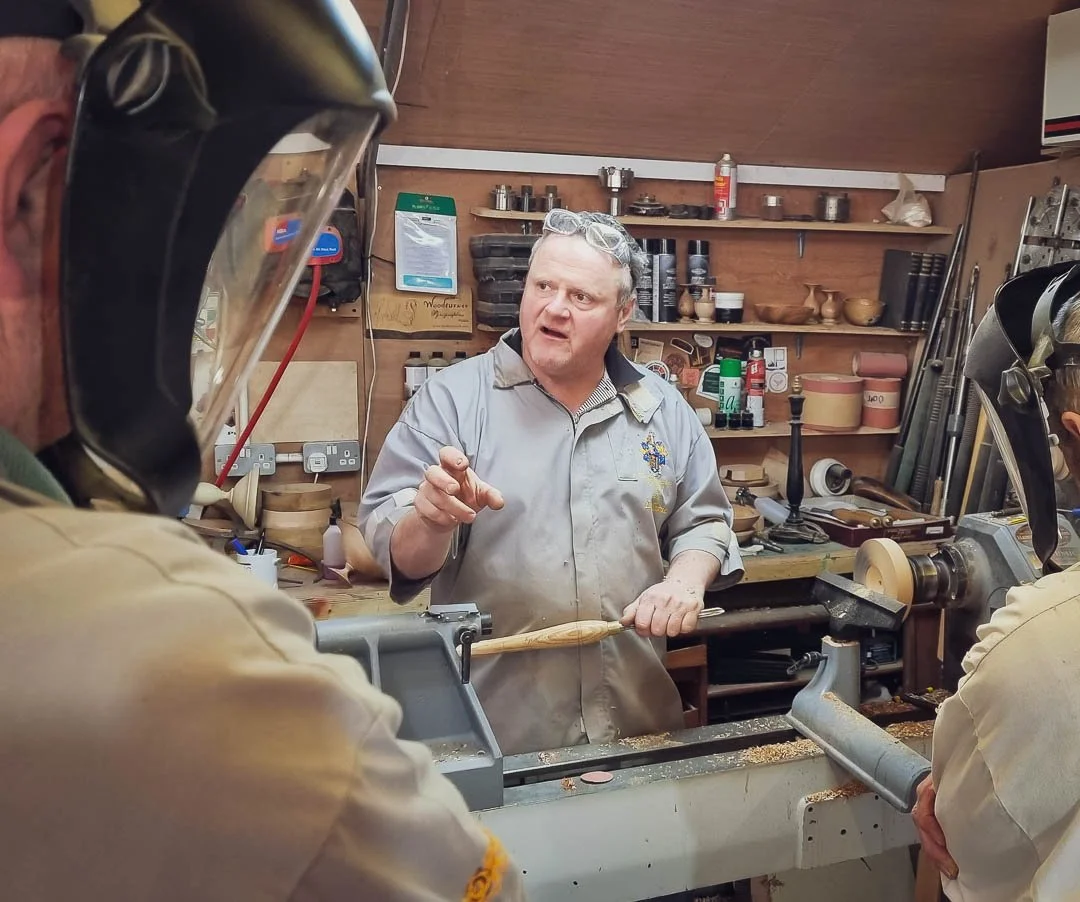
Les Thorne RPT
Les has been a professional turner for over 25 years, on the Register of Professional Turners since 2001. Where Martin came to turning through design and social media, Les took the traditional route: years of production work and hands-on experience. His advice to students is the same advice he was given: "Visualise the shape, then turn the shape."
He's primarily a production turner, and the range of his work reflects that. Period reproductions, contemporary lighting and furniture, columns for houses, candlesticks for churches, staircase spindles, one-off specials. No job too small or too large. Twenty-five years at the lathe means he's forgotten more about the skew chisel than most turners will ever learn.
Les runs his own business from our shared workshop here at the school, and occasionally teaches classes alongside Martin. His blunt but thoughtful feedback has sharpened my own thinking over the years.