
Here's a truth that experienced turners know but beginners often miss: sanding doesn't fix problems. It reveals them.
When you're new to turning, there's a temptation to treat the sandpaper as a rescue tool. The surface is torn? Sand it smooth. The curve isn't quite right? Sand it better. The tool marks are showing? Sand them away. But sanding should be finishing, not fixing. It's meant to refine what's already good, not transform what isn't.
When you apply a finish, usually something penetrating like Danish Oil, suddenly every shortcut becomes visible. The ripples you thought you'd sanded out. The slight flatness in what should be a flowing curve. The scratch patterns that weren't quite removed before moving to the finer grit.
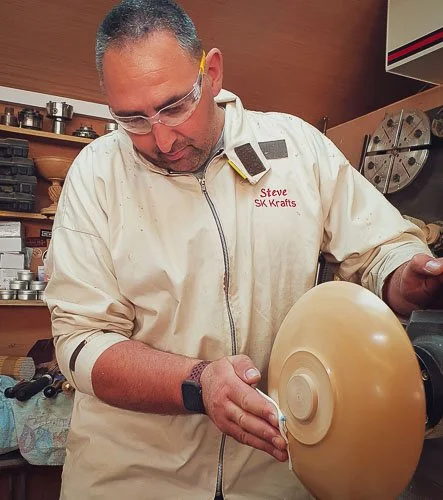
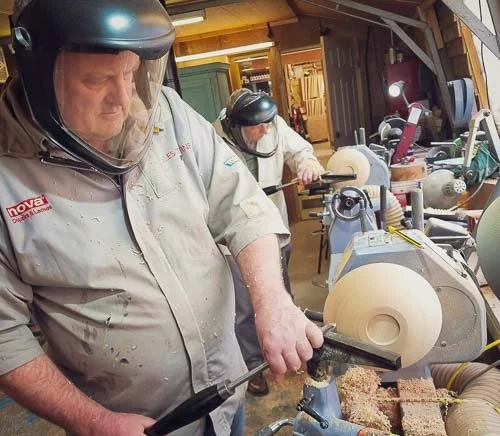
This isn't meant to embarrass anyone. It's meant to illustrate. What you can't see clearly in raw wood becomes obvious when finish is applied. The oil sinks into scratches differently than smooth grain. The light catches inconsistencies that were invisible before.
This lesson is "cut better." The cleaner your tool work, the less sanding has to do, and the better your finish will look. This is why we spend so much time at The Woodturning School on tool control before we even talk about finishing. Sharpening matters. Angle matters. Pressure and speed and body position matter. Get those right, and sanding becomes a brief, pleasant final step rather than a desperate repair attempt.
There's a deeper lesson here too, one that extends beyond the workshop. In life, as in turning, it's tempting to apply surface fixes to underlying problems. To paper over difficulties rather than address them at the source. The wood teaches us that this approach has limits. Eventually, the finish goes on, and the truth emerges.
“Better to do the fundamental work well. Better to cut cleanly from the start.”
Class Recommendation: Our Bowl Improvers class focuses specifically on this progression – from rough turning to refined finish, with emphasis on the tool work that makes good sanding possible.