
Why Small Classes Accelerate Skill Growth
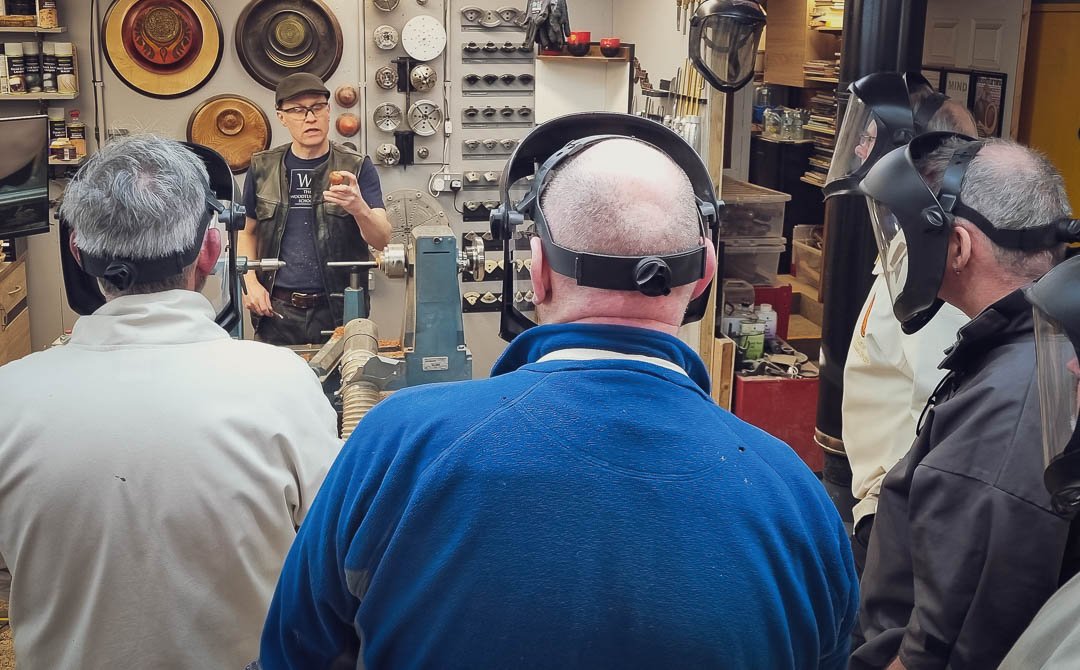
Small groups + focused tuition = faster progress. That's the premise behind how we teach at The Woodturning School. But it's not just a feeling, there's genuine research behind why this approach works, particularly for adult learners acquiring practical skills.
What the Research Says About Adult Learners
Most class size research focuses on children in schools. But a review of adult education literature conducted through vocational education research found that the ideal number for face-to-face adult learning is between 13 and 17 students — and smaller still yields better results.
The findings are clear: smaller classes lead to more student-teacher time, improved student management, and the ability to implement effective adult learning strategies. The result is higher cognitive achievement and fewer dropouts.
For hands-on skills like woodturning, this matters even more. When you're learning to control a gouge while wood spins at 1,500 RPM, you need feedback in the moment — not twenty minutes later when I finally reach your lathe. Small classes make that immediate correction possible.
How We Structure Our Classes
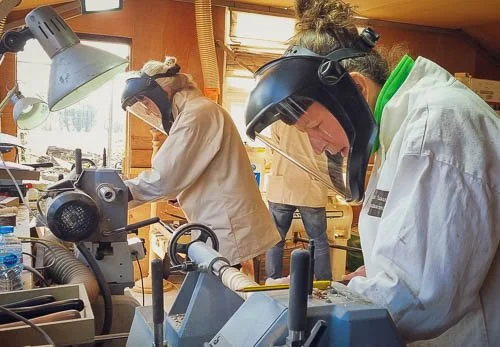
Our group classes are capped at five students. Some Sunday sessions run with just two. One-to-one tuition is available for those wanting exclusive attention on a particular technique.
If research suggests 13-17 is ideal for adult learning, five is exceptional. Although we have the space here to greatly expand the operation, I really don’t want to.
With our current set-up, I can spend meaningful time with each student, watch your technique develop across the day, and tailor explanations to how you learn best, whether you need more demonstration, more hands-on trial, or more conversation about the 'why' behind the technique.
Our workshop has six full-size lathes — two Axminster 406s, an Axminster 508, a OneWay 2346, and Nova Saturn models. Everyone has their own machine. Nobody waits around. You're making shavings from the first hour.
The Overhead Camera System
The critical action in woodturning happens where tool meets wood. In traditional demonstrations, students crowd around a single lathe, often seeing the tutor's back rather than the cut itself.
We use an overhead camera feeding to a large screen. When I demonstrate a technique, every student sees exactly what I see — the bevel angle, direction of cut, hand position, the shavings that tell you it's going right.
Research on motor skill acquisition confirms that visual feedback is particularly powerful when learning physical skills — it allows you to compare your movements against a clear model. You watch, then try. I come to your lathe and offer corrections. The combination accelerates learning considerably.
The Numbers Behind Our Approach
Course fill rate: Our classes consistently fill, with beginner sessions often booking out months in advance. When people travel from across the UK and plan ahead, it suggests genuine value.
Repeat attendance: A significant portion of students return when they take up woodturning. From the Two-Day Beginners Class to Box Turning to the Skew and Spindle Gouge Day etc. More importantly, they report what they've achieved between classes: bowls turned at home, techniques refined, problems solved.
Typical outcomes: Complete beginners leave a single-day course with two or three finished pieces. After the two-day course, they've developed enough foundation to continue practising without reinforcing bad habits, and that matters. Practice makes permanent, not perfect. Small classes catch errors before they become embedded.
Pricing
Our courses aren't the cheapest available. The question is what you're getting for the money.
With larger classes, tutors may compromise on individual attention. An instructor with twelve students can spend five minutes per hour with each person. With five students, that becomes twelve minutes, and conversations become genuine exchanges rather than rushed corrections.
The research puts it plainly: small classes enable 'sufficient quantity and quality of feedback and student-teacher interaction.' That's precisely what we're offering, and it's what makes the difference between a nice day out and genuine skill development.
Small classes allow for the kind of feedback that transforms beginners into capable turners and one-day experience students into valued customers. They create space for questions, mistakes, and patient correction that builds real confidence. That's what you're investing in, and that's one of the reasons we teach this way.
Take a look at our beginners classes HERE and Intermediate+ classes HERE if you'd like to experience our approach for yourself.