
Two Days, Three Pieces, and Something to Take Home
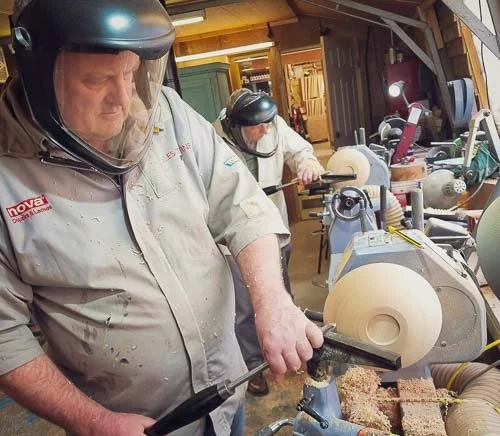
I've been teaching the Two Day Beginners class for years now, and somewhere along the way I started noticing something. Students were rushing. Not because they wanted to, but because the schedule demanded it. We were trying to cover too much ground in too little time, and rushing is the enemy of learning.
When you're worried about finishing a piece before the clock runs out, you're not absorbing the feel of the tool, the feedback from the wood, or the satisfaction of doing something well. You're just surviving the day.
For 2026, we've restructured the two days to now have a clearer focus, and there's something new waiting for you at the end.
The New Structure
Day One is now dedicated entirely to spindle work. Day Two is all bowl turning. The overnight gap between the two gives your brain time to consolidate everything before tackling the more demanding faceplate work.
Day One: Spindle Work
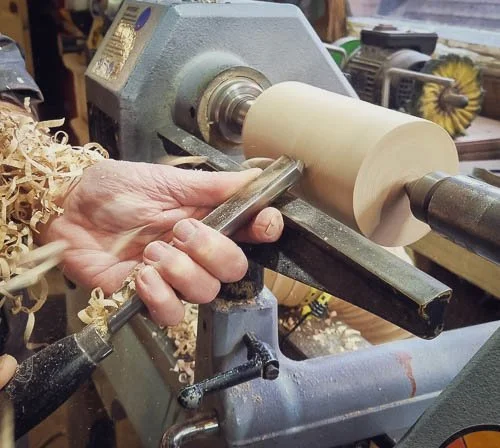
You'll start with a decorative mushroom. There's no hardware to fit, no dimensions that have to be exact. The cap can be flat or domed, the stem thick or thin. It's a forgiving project that teaches you a lot about tool control and developing your eye. What pleases you? Why? These are questions worth asking early.
After lunch comes the bottle stopper. Now we add precision. The tenon has to fit the hardware correctly. You'll learn to work to dimensions, create clean shoulders, and produce a finish that feels good in the hand. The skills here transfer directly to everything else you'll make.
Two projects, two lessons: creative freedom and accuracy. Both are essential, and separating them makes each clearer.
Day Two: Bowl Turning

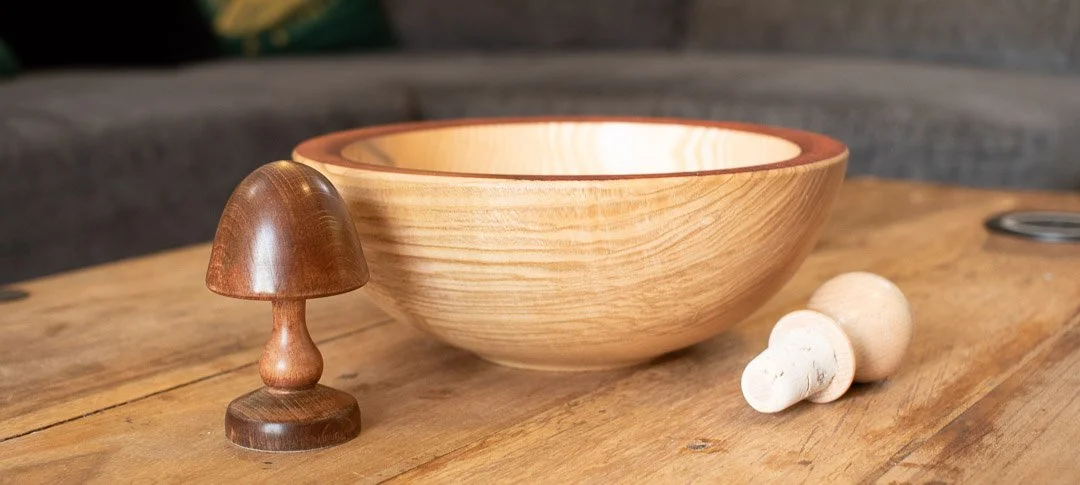
The whole of Day Two is dedicated to your first bowl, roughly 8 x3”. Bowl turning is different from spindle work. The grain runs across the piece rather than along it, and the tools behave differently as a result. You're working with faceplate orientation now, and that changes everything about how you approach the lathe.
You'll learn to shape the outside curve, hollow the inside, and feel the wall thickness with your fingertips. Everything you learned on Day One feeds into this. By afternoon, and if there's time and you're fancy it, we might even add some colour to the rim.
No clock-watching. No rushing to squeeze in another project, just the time you need to learn the nuances of bowl turning.
Why Spindles First, Bowls Second
There's a reason for this order, and it comes down to how adult learners absorb new skills.
Spindle work is more intuitive for beginners. The grain runs along the length of the piece, which means cuts behave predictably. You can develop your tool control, your stance, your rhythm, without fighting the wood at every turn. The feedback loop is tight: do the right thing, get a good result. Do the wrong thing, and it's immediately obvious why.
Bowl turning introduces complexity. The grain runs across the piece, so the tool meets alternating end grain and side grain with every rotation. Cuts that worked beautifully on a spindle suddenly tear out. The rules shift. But by Day Two, your hands already remember the feel of a gouge. You've built the foundation. You can focus on what's new rather than trying to learn everything at once.
The overnight break matters too. Sleep consolidates learning. It's not wasted time; it's processing time. When you pick up that bowl gouge on Day Two, your brain has had a chance to organise everything you discovered the day before.
The Workshop Companion
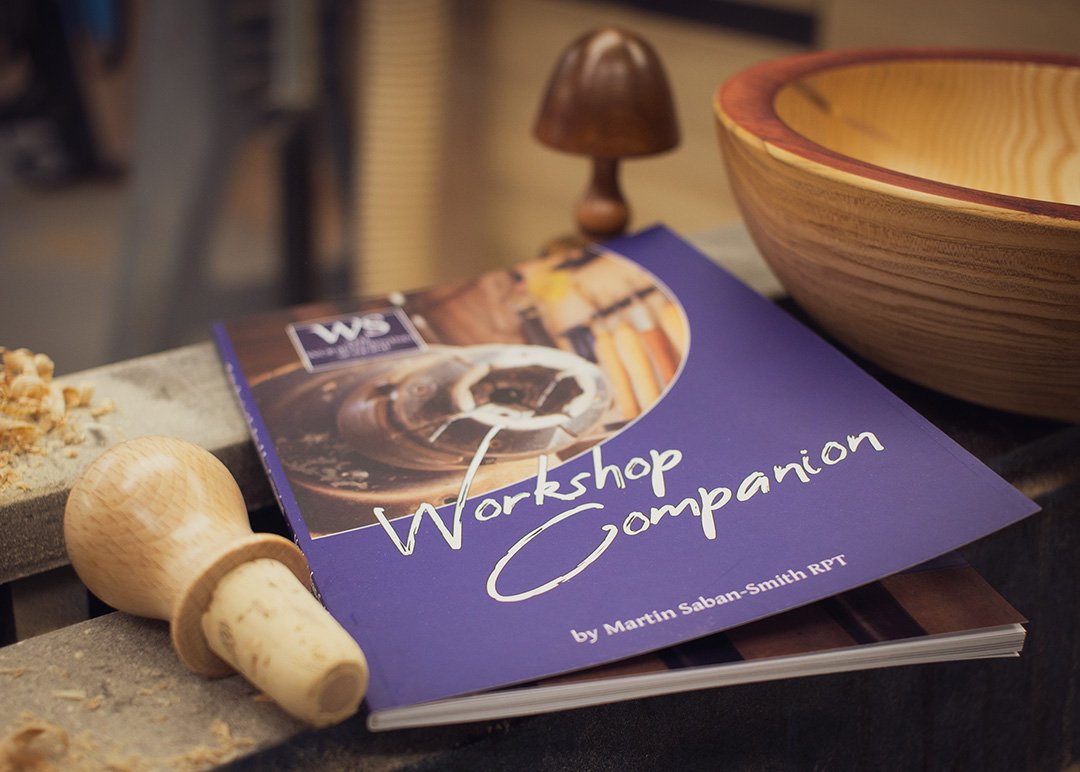
This is the new addition I'm most pleased about.
Every Two Day Beginners student now receives a 60-page Workshop Companion to take home and to return to when you're back at your own lathe and some things have gone fuzzy.
It covers the essentials: tools and what they are for, sharpening (the non-negotiable skill that underpins everything else), simple design principles, timber selection, finishing tips, and what to do when things go wrong. Because things will go wrong, and that's part of learning.
There's a quick reference section at the back for the practical bits you'll want to look up in a hurry. Guide speeds for different diameters. Grit progressions. Common catches and their causes. The kind of information that's hard to remember when you need it most.
And there's space for your own notes. Your observations, your questions, the things you want to try next. The companion grows with you.
Why This Matters
You will learn an enormous amount in two days, and then you go home and slowly forget most of it. Not because you're not trying, but because there's so much to absorb and so little of it sticks without repetition.
The refresher videos help. New videos were added in 2025 to bring the total watch time up to almost two hours you can watch when you need a reminder of how that cut actually looked, or what sequence to follow for mounting a bowl blank. But video doesn't replace having something in your hands, something you can flip through while standing at the lathe.
What You'll Leave With
Three finished pieces: a mushroom, a bottle stopper, and a bowl. Each one teaches something different. Each one is something you made yourself, from rough timber to finished object.
Access to the refresher videos for when the details get hazy.
A 60-page Workshop Companion that bridges the gap between the classroom and your own workshop . . . and a couple of other little things, too.
The two days are a foundation, not a destination. What you do next is up to you, and The Woodturning School will be there to assist you through the progression.
The Two Day Beginners Class runs on Thursdays and Fridays. Maximum five students, so there's time for proper attention. Everything's included: timber, tools, safety equipment, lunch, and now your Workshop Companion to take home.
Book Your Place
Booking your place is simple. The calendar shows the next available date.
Click the date, then click the time. Then fill in some details and pay the deposit. We’ll look after the rest for you.
The day
Day One:
9am: Meet at the Garden Centre Coffeeshop
9.30am: Workshop begins with spindles and a Mushroom
12.30pm: Lunch at the Coffeeshop (included)
1.00pm: Continue spindles with a Bottle Stopper
2.30pm: Coffee break
4pm: Finish and tidy.
Day Two:
9am: Meet at the workshop
9.30am: Workshop begins: Bowl turning
12.30pm: Lunch at the Coffeeshop (included)
1.00pm: Finish the bowl
2.30pm: Coffee break
4pm: Finish and tidy.
Included: All timber, tools, consumables, safety equipment, lunch, refreshments, your pen and platter to take home.
Payments
A deposit of 30% is required to secure your booking. This deposit is non-refundable in the event of cancellation by the client. It covers, buying materials and advertising your space in the event of cancellation. Amendments can be made up to 14 days before date for £10 admin fee. Cancelling within 14 days will forfeit all monies paid. Click HERE for full terms and conditions.