
Why "Handmade" Matters More Than Ever
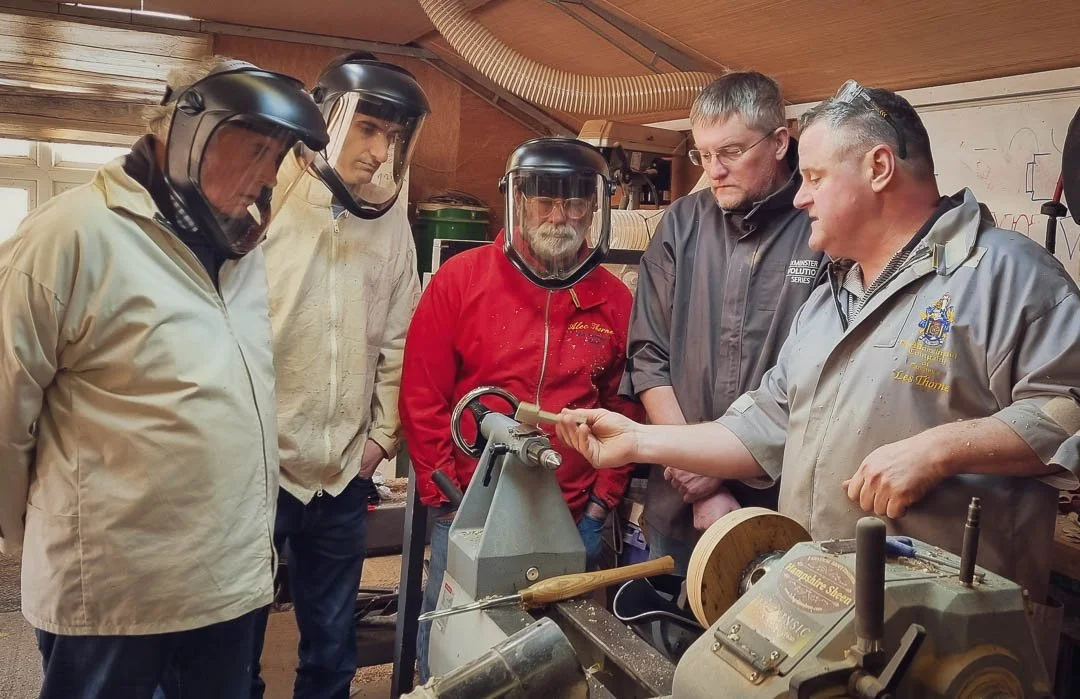
I've been thinking about this a lot lately. Not in any grand, philosophical way — just standing at the lathe, watching shavings curl away from a piece of ash, and wondering why this particular activity feels so fundamentally different from almost everything else in modern life.
Here's the thing: we're surrounded by objects. Phones, furniture, clothes, kitchenware — all produced somewhere far away, by processes we'll never see, from materials we can't identify. And most of it works perfectly well. But there's something missing, isn't there? Something we feel even if we can't quite name it.
It turns out, a lot of people are feeling the same thing.
The Numbers Tell a Story
According to the Crafts Council, 73% of UK adults have purchased handmade goods in recent years, contributing to annual sales exceeding £3 billion. Over 10 million Brits now buy craft online — more than triple the number a decade ago. And here's what catches my attention: in-person purchases remain popular too. People still want to meet the maker. Touch the work. Ask questions about the process.
This is about something deeper than buying something pretty. It seems to be a hunger for authenticity, for connection, for objects that carry meaning beyond their function.
What We're Really Looking For
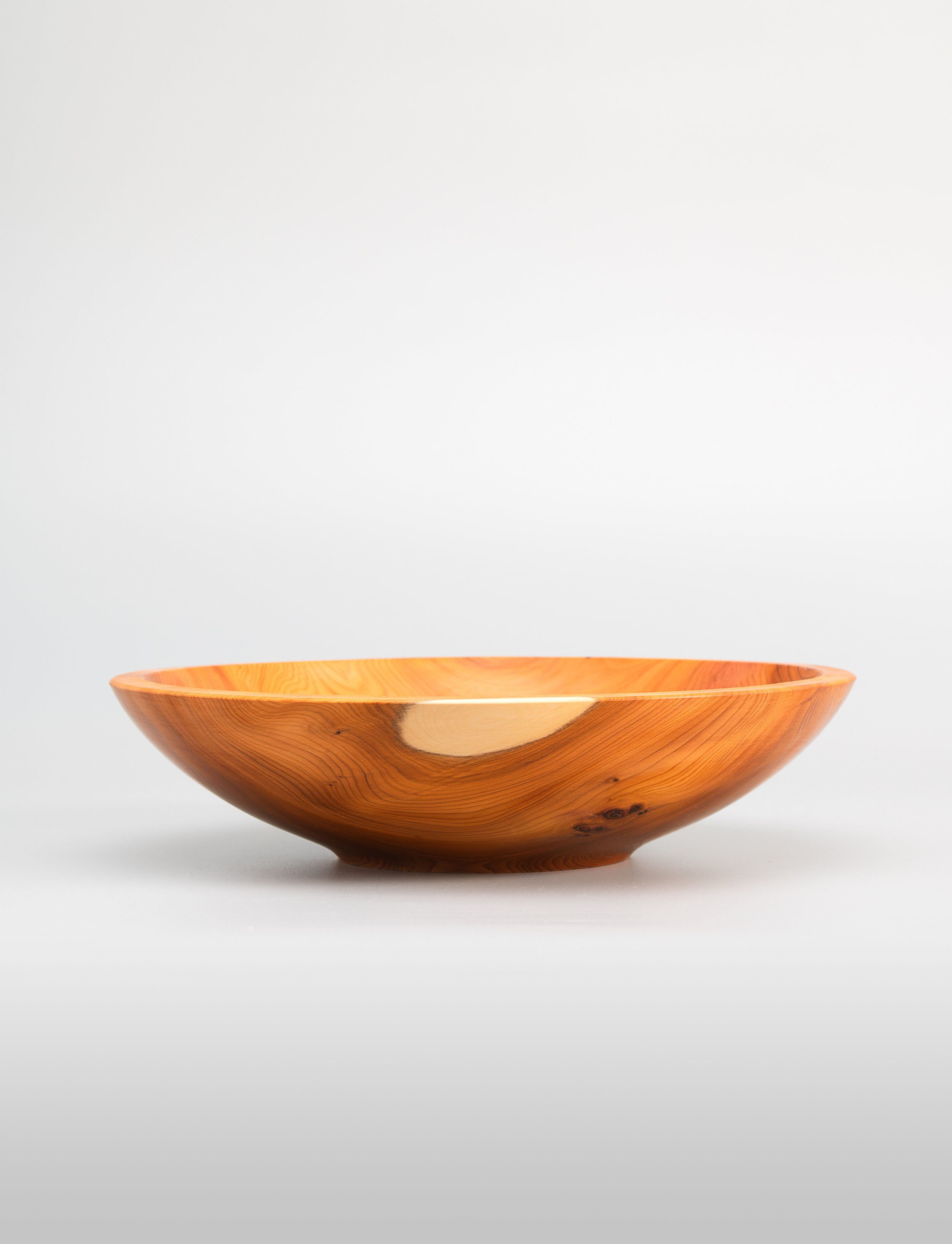
Sustainability is part of it, certainly. People are drawn to items made with recycled and natural materials such as reclaimed wood, organic fabrics, and finishes that won't outlast civilisation. At The Woodturning School, we work exclusively with responsibly sourced timber, much of it from trees that needed to come down anyway. There's something satisfying about giving that wood a second life as a piece of woodturning someone will use for decades.
But I think sustainability is almost a side effect of something more fundamental. What people really want is a story. They want to know where something came from, who made it, and what decisions went into its creation. Mass production can't provide that. A handmade bowl can.
"Wood carries memory and history. When you work with a piece of oak, for example, from a storm-felled tree, you're not just making an object, you're continuing a story that started long before you arrived.
The Return to Traditional Crafts
Something interesting is happening with younger generations. Traditional techniques — pottery, weaving, embroidery, woodturning — are making a comeback. Under-35s now account for almost a third of craft buyers in the UK. They're not interested in ironic nostalgia; they're genuinely drawn to craftsmanship and heritage.
I think I understand why. When everything in your life exists on a screen: your work, your social connections, your entertainment, there's a profound relief in doing something with your hands. Something where the feedback is immediate, physical, real. Where you can see progress accumulate. Where mistakes become what I like to call "design opportunities" rather than notification errors.
Woodturning offers this in spades. The moment you touch tool to spinning wood, something happens that no app can replicate. The resistance in your hands. The sound of the cut. The smell of fresh shavings. It's direct conversation between maker and material, with no intermediary processes, no screens, no delays.
What Happens at The Woodturning School
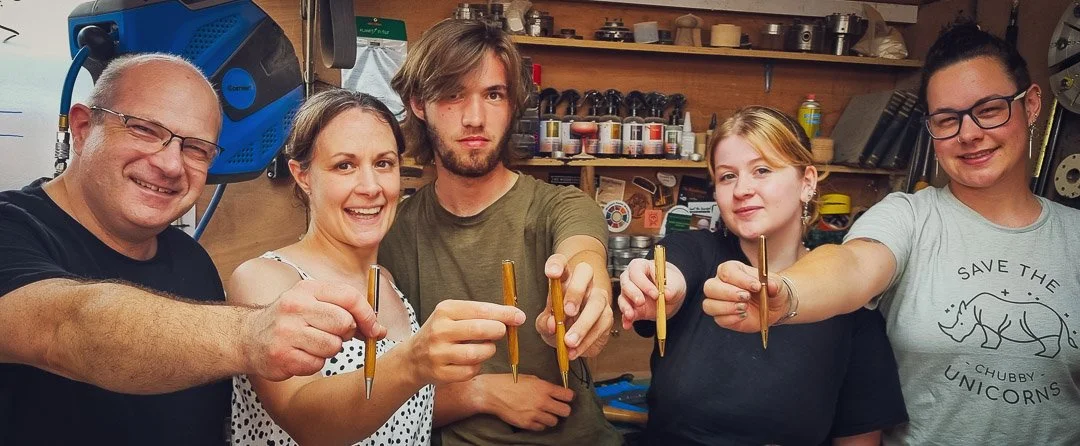
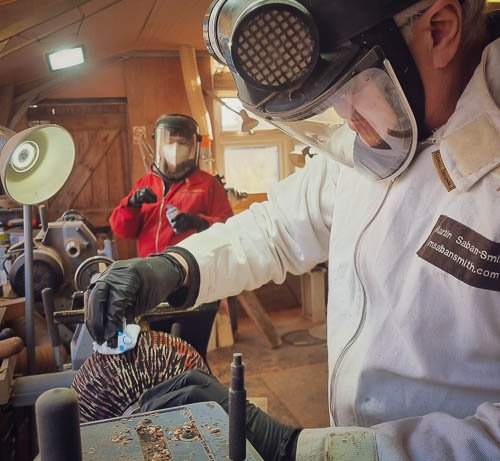
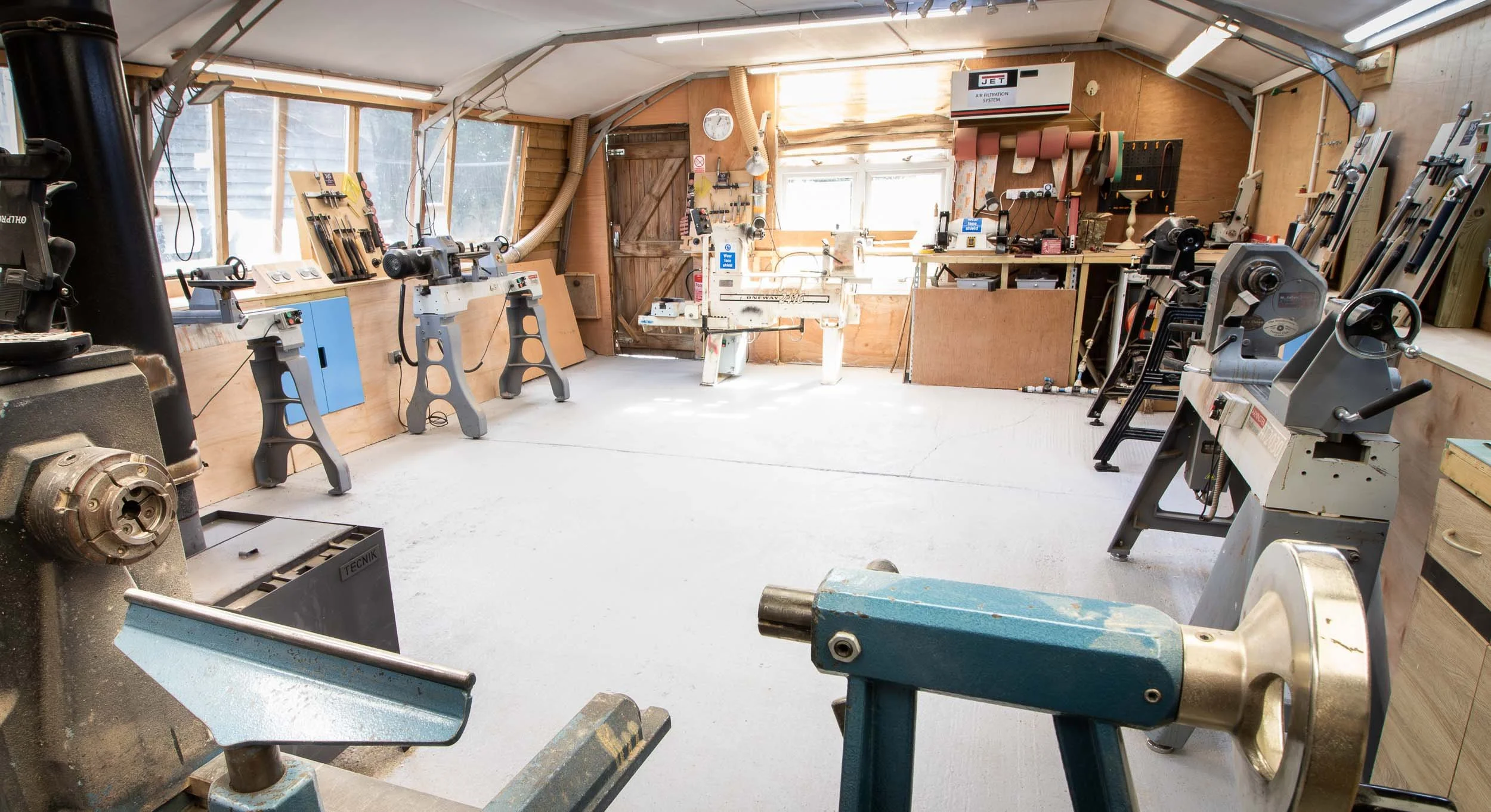
At The Woodturning School in Hampshire, Les Thorne and I teach people to make things. That sounds simple, and in a way it is. But something else happens in those classes that's harder to describe.
People arrive nervous, sometimes apologetic about their lack of experience. "I'm not creative," they say, or "I'm not very good with my hands." By the end of the day, they've made a bowl with their own hands, from wood that was a tree. And something in their posture changes. Something about how they hold themselves.
What gives me the most satisfaction is seeing other people grow in their craft. Whether it's a student making their first box, a club member refining their sense of proportion, or someone who writes to say a YouTube video gave them the courage to try something new. Those moments are the real reward.
We don't just teach technique (though we do that too). We teach attention, patience, acceptance of imperfection. We teach that simple work, done with care, creates satisfaction that complex work done carelessly never will. These are life lessons that happen to take place at a lathe.
Why This Matters Now
The global handicrafts market was valued at nearly $740 billion in 2024 and is projected to approach $1 trillion by 2030. That's not a niche hobby market. That's a fundamental shift in how people want to live.
I believe craft has something essential to teach us about being human — about attention, patience, recovery, growth, and the deep satisfaction of making something well. In a world that increasingly feels disposable and disconnected, handmade objects anchor us. They remind us that things can be made with intention, that quality exists, that someone cared enough to get the details right.
Through my YouTube channel and demonstrations at woodturning clubs across the country, I try to share this message: you don't need to be an expert to start. You don't need expensive equipment or years of practice. You just need to pick up a tool and try. Make terrible bowls with enthusiasm that far exceeds skill. Love every minute of it.
The craft meets each of us exactly where we are and offers what we need — if we're paying attention.
Getting Started
If any of this resonates with you or you've felt that pull toward making something you can hold, I absolutely encourage you to try it. Our Experience Days at The Woodturning School are designed for complete beginners. You'll spend the day at the lathe, make your first piece, and discover whether this might be something you want to explore further.
No experience necessary. No artistic background required. Just curiosity and a willingness to try something new.
The lathe is always waiting when you're ready to begin.
Book an Experience Day: www.thewoodturning.school
Watch tutorials on YouTube: @msabansmith
Join the Woodturning360 community: www.woodturning360.com
Industry source: CMTIA Craft Industry Trends for 2025