
More Than a Hobby: How Woodturning Keeps Your Brain Sharp
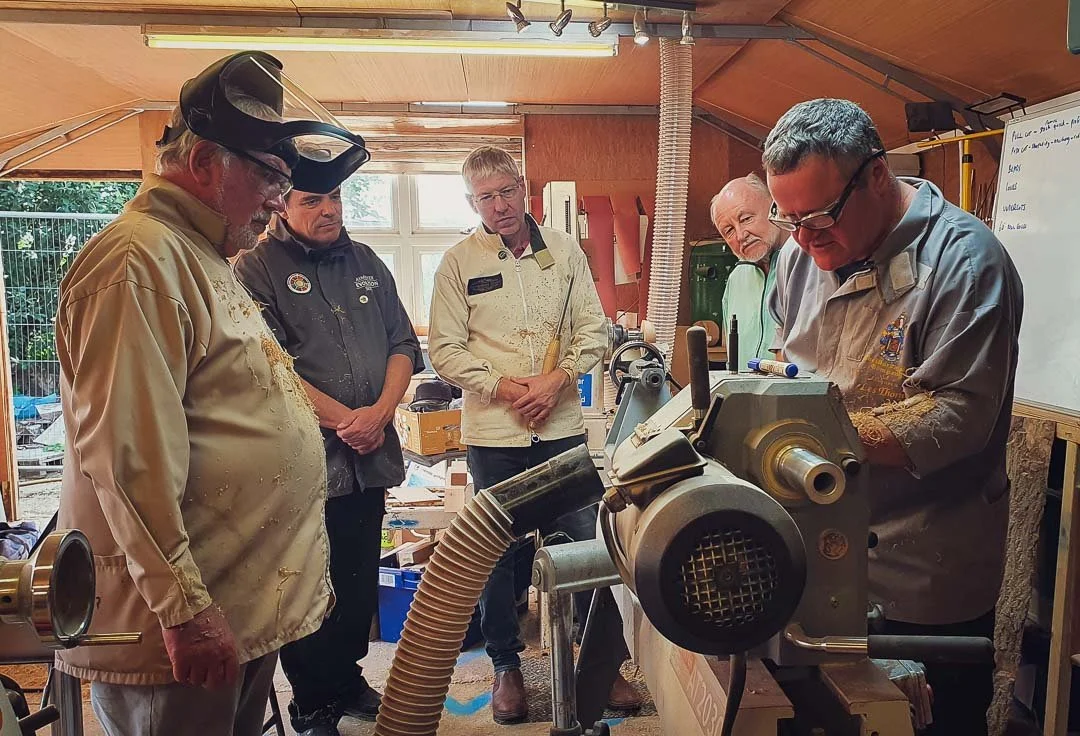
When people ask why I've spent over ten years at the lathe, I could talk about beautiful bowls or the satisfaction of working with timber. Both are true. But there's something else happening that matters more: woodturning is extraordinarily good for your brain.
Recent research confirms what makers have always sensed. Working with your hands isn't just enjoyable. It's brain training.
The Number That Caught My Attention
A major study by the Mayo Clinic followed people from middle age through their 80s, tracking who did crafts like woodworking, pottery, or sewing, and who didn't.
The result: people who did crafts were 45% less likely to develop memory and thinking problems as they aged.
Forty-five percent. That's huge.
Even people who only started crafting in their 70s saw benefits in a 28% reduction in decline. But those who'd been making things with their hands since middle age? Nearly half the risk of cognitive problems.
What Happens in Your Brain When You Make
Woodturning isn't passive. Every moment at the lathe exercises your brain in specific ways:
Your Hands and Eyes Work Together
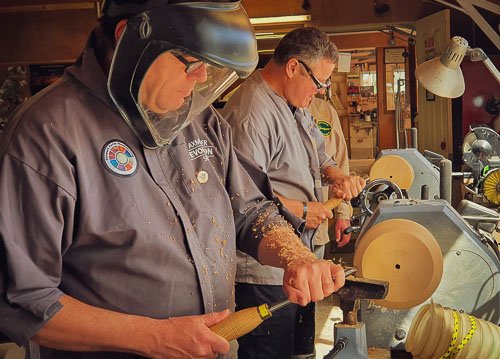
Every cut requires precise coordination. The tool angle must be accurate or you get a catch instead of a clean cut. This constant fine-tuning keeps the brain's movement centres active and builds connections between what you see and what your hands do.
You Think in Three Dimensions
Turning means holding a shape in your mind while removing wood from a spinning cylinder. You're constantly imagining what's hidden on the other side, planning cuts that will reveal the form you're after. This exercises the parts of your brain that handle spatial thinking which are the same areas that tend to decline if you don't use them.
You Solve Problems in Real Time
Wood is never predictable. Grain changes direction. Hidden flaws appear. The blank isn't quite round. Every piece presents challenges that demand quick thinking. You can't always pause to look up the answer. You have to read the wood and make decisions while the lathe is spinning. This keeps your problem-solving brain active.
You Get Lost in the Work
Turning demands focus. Lose concentration, and you risk a catch or uneven surface. But this focused attention isn't stressful, it's far more enjoyable and absorbing. Time disappears. Nothing else matters. Psychologists call this "flow," and it has real benefits: stress hormones drop, the critical voice in your head quiets down, and your brain enters a state where learning happens more easily.
Why Both Hands Matter
Scientists have discovered something interesting: the brain benefits when both hands work together in different but coordinated ways, especially when they cross the middle of your body.
Woodturning is exactly this. Your left hand (for right-handed turners) steadies the tool and controls position. Your right hand guides the cutting edge and adjusts the angle. Both are constantly talking to each other, making tiny adjustments based on what you're feeling and seeing. This coordination keeps both sides of your brain engaged and strengthens the connections between them.
As we age, those connections naturally weaken. But activities that require both hands working together can slow that decline.
Creative Work Makes Your Brain Younger
A recent study looked at people who were experts in creative activities (dancers, musicians, visual artists). Researchers measured how "old" their brains appeared compared to their actual age.
The finding: people who regularly engage in creative activities have brains that function like those of younger people. The more skilled and experienced they were, the bigger the effect. Even short-term learning showed benefits, though long-term practice was even better.
Woodturning fits this category perfectly. It requires planning, problem-solving, spatial thinking, fine motor control, and creativity. That combination exercises multiple brain systems at once which all keep the brain healthy.
Making Things Feels Good for a Reason
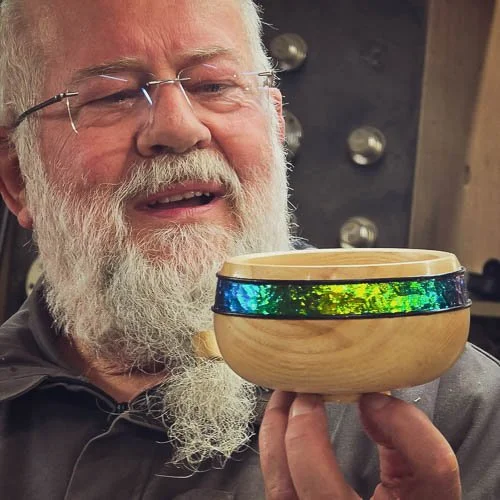
The image that really says “I Made This”!
A researcher named Kelly Lambert uses the term "behavioraceuticals" - activities instead of pills that improve your brain chemistry naturally.
Her research shows that hands-on work creating something tangible triggers dopamine, your brain's reward chemical. This reduces stress hormones and improves your ability to think flexibly and solve problems.
Woodturning delivers this perfectly. You start with a rough piece of wood. You make cuts. Shavings fly. Form emerges. At the end, you hold something you've created. That journey from nothing to something creates a chemical reward in your brain that benefits your mental health.
Learning With Others Adds Another Benefit
While you can turn alone, learning involves other people. At The Woodturning School, classes mean watching demonstrations, asking questions, getting feedback, and maybe helping other students either physically or through moral support. This social side of learning exercises additional parts of your brain beyond the physical skills.
Research consistently shows that social connection protects your brain. Isolation is a risk factor for cognitive decline; connection helps prevent it. Learning alongside others adds another layer of benefit to the craft itself.
The Calming Effect
Many turners describe the experience as meditative, and there's science behind this. The rhythmic nature of turning, the focus required, the feel of wood and tool — these combine to activate your body's relaxation response.
This isn't just feeling relaxed. Research shows that focused but low-stress activities can reduce inflammation, lower stress hormones, and improve emotional regulation. The concentrated calm of woodturning provides mental health benefits alongside the brain training.
Your Brain Can Still Learn and Grow
The most encouraging news from brain research: your brain stays capable of learning and changing throughout your life. The old idea that your brain stops developing in your twenties and just declines after that? Wrong.
Yes, some things naturally slow down with age, like how fast you process information, how much you can hold in your mind at once. But other abilities, particularly ones you actively use, can be maintained or even improved. Your brain is more like a muscle than we thought: use it or lose it.
Woodturning uses it.
Every time you stand at the lathe, you're:
Strengthening skills you've already learned
Developing new ones
Keeping your brain flexible and responsive
Building a buffer against age-related decline
Building a Brain Buffer
There's a concept called "cognitive reserve" that explains why some people stay mentally sharp despite physical brain changes from aging or disease. It's not that their brains haven't aged, it's that they've built such strong brain connections that they can afford some deterioration without it showing.
How do you build this reserve? Through exactly what woodturning provides: complex hand-eye work, problem-solving, spatial thinking, creativity, and continuous learning.
The Mayo Clinic data showing 45% reduced risk among craft practitioners is likely explained by this: they'd built such robust brain connections that age-related changes didn't impact them as much.
What This Means for You
If you already turn, you're doing something genuinely good for your brain. Every session contributes to your mental wellbeing.
If you're considering starting, here's what matters:
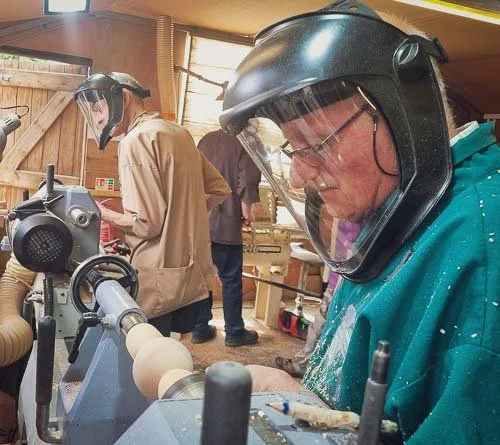
Start now. While starting in midlife shows the strongest benefits, even beginning in your 70s helps. The best time was twenty years ago; the second best time is today.
Be regular. Weekly or fortnightly sessions build brain connections better than occasional marathons. Consistency matters more than duration.
Keep challenging yourself. Don't just repeat what you already know. Learning new techniques and trying unfamiliar forms provides more brain benefit than comfortable repetition.
Focus on the doing. The brain benefits come from the process — the attention, the problem-solving, the coordination — not from the finished piece. Mistakes are learning opportunities, which means they're brain development opportunities.
Learn with others when possible. Classes, workshops, and clubs add social benefits to the individual work.
At The Woodturning School
We've always known that students leave with more than technical skills. They leave energised, confident, satisfied in ways that go beyond the bowls or spindles they've made. Now the research explains why.
When Les and I teach, we're facilitating brain training that has measurable benefits. The hands-on, problem-solving, spatially demanding, socially engaging nature of our classes delivers everything brain research identifies as beneficial.
We keep classes small (maximum five students) because skill development requires individual attention. The real-time feedback, the immediate correction when tool angle is slightly off — these aren't luxuries, they're essential for building the brain connections that make skills stick.
The Long View
Woodturning isn't something you do for six weeks and stop. It's something you build into your life, something that becomes part of who you are. This long-term commitment is what provides the strongest brain benefits.
The Mayo Clinic participants who showed 45% reduced risk weren't people who took one craft class. They were people who made hands-on work a regular part of their lives over years.
That's the invitation. Not to take a class for your brain health (though that's a fine reason), but to discover something engaging enough and satisfying enough that you want to do it for years. The brain benefits come along naturally.
Why This Matters
There's something profound here: the activities most beneficial for brain health are what humans have done for thousands of years. Our brains evolved doing this work. We're built for it.
In our screen-heavy modern world, many of us have lost connection with that. Woodturning offers a way back. Not as nostalgia or a rejection of modern life, but as a reclaiming of something essential about how our minds work best.
When you stand at the lathe, tool in hand, wood spinning, you're not just making a bowl. You're engaging your brain in the complex, demanding, creative work it was designed for. The cognitive benefits are built into the activity itself.
Start Here
If you've been curious about woodturning, the research gives you another good reason to try. This isn't frivolous. This is an investment in your brain health with real, measurable benefits.
Our Two-Day Beginners Class provides everything you need: tools, materials, instruction, and the hands-on problem-solving your brain will benefit from. By the end, you'll have completed three projects and gained skills you can develop for years.
Or if you want to learn more first, download our First Day Workshop Checklist — a simple guide to what happens when you arrive, what we'll cover, and what you'll make.
The lathe is waiting. So is your brain!
Book Your Class: Beginners Woodturning Classes
Research Sources:
Mayo Clinic Study of Aging - Roberts RO, et al. "Risk and protective factors for cognitive impairment in persons aged 85 years and older." Neurology, April 2015. Available at: https://www.aan.com/PressRoom/Home/PressRelease/1363
Brzezicka, A., et al. "Creative experiences and brain clocks." Nature Communications, October 2025. https://www.nature.com/articles/s41467-025-64173-9
Buchman AS, et al. "Physical activity, common brain pathologies, and cognition in community-dwelling older adults." Neurology, February 2019. https://www.nia.nih.gov/news/physical-activity-and-motor-ability-associated-better-cognition-older-adults-even-dementia
Comprehensive assessment of fine motor movement and cognitive function among older adults - BMC Geriatrics, January 2024. https://bmcgeriatr.biomedcentral.com/articles/10.1186/s12877-024-04725-8
Lambert, K. (University of Richmond) on behavioural interventions and brain chemistry - "Behavioraceuticals" research
Csikszentmihalyi, M. Flow research and cognitive benefits of absorbed attention. TED talk, 2004.
Levisay, C.C. (Clinical Neuropsychologist). "This is your brain on crafting." CNN Health, March 2014. https://www.cnn.com/2014/03/25/health/brain-crafting-benefits